
You wash your car faithfully, but the world of paint protection feels like a maze. Carnauba, synthetic, ceramic, graphene—the options are overwhelming. You’re not just looking for a product; you’re looking for confidence. You need to know that the time and money you invest will actually shield your car from the elements, enhance its look, and preserve its value.
This isn’t just another buying guide. This is your definitive resource for understanding the science behind automotive waxes and coatings. We’ll break down how each type of protection works at a microscopic level, helping you move past marketing hype and make an informed decision that’s right for your vehicle, your lifestyle, and your budget.
First, A Critical Distinction: Polishing vs Protecting
Before we dive into protection, it’s crucial to understand a common point of confusion. Many people use the terms “polish” and “wax” interchangeably, but they perform opposite functions.
- Polishing is Corrective. Think of it like a very fine liquid sandpaper. A polish contains abrasives that physically level your car’s clear coat, removing microscopic imperfections like swirl marks, light scratches, and oxidation. It creates a perfectly smooth, reflective surface.
- Protecting is Additive. A wax, sealant, or coating adds a sacrificial layer on top of your paint. This layer is what takes the abuse from UV rays, bird droppings, acid rain, and road grime, preserving the pristine paint underneath.
You always polish before you protect. Applying a wax to swirled, imperfect paint is like putting a beautiful frame on a blurry photograph—it just highlights the flaws.
The Classic Choice: Natural Carnauba Wax
For generations of car enthusiasts, carnauba has been the gold standard for a deep, rich shine. Sourced from the leaves of the Copernicia prunifera palm in Brazil, this natural wax is prized for its aesthetic qualities.
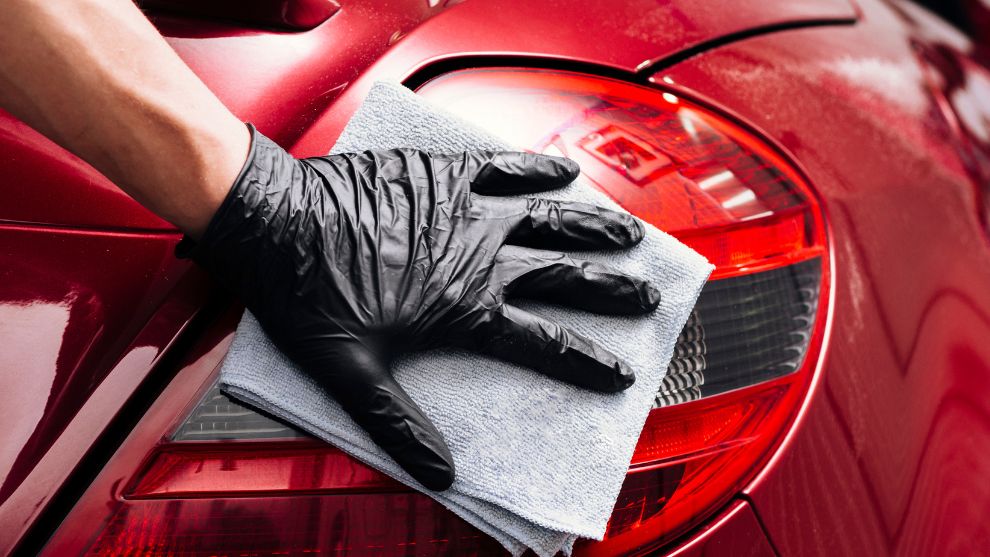
The Science Behind the Shine: Carnauba wax works through physical adhesion. It doesn’t chemically bond to your paint. Instead, it fills in the microscopic pores of the clear coat, creating an incredibly smooth, flat surface. This smoothness allows light to reflect uniformly, producing the signature deep, wet-looking gloss that makes paint colors appear richer and darker.
Despite the rise of synthetic alternatives, this unparalleled aesthetic is why carnauba still commands a remarkable 38.1% of the North American car wax market.
- Pros: Unmatched depth of shine and gloss, pleasant application experience, biodegradable.
- Cons: Low durability (typically lasts 4-6 weeks), low melting point makes it vulnerable in hot climates, requires frequent reapplication.
- Best For: The show car owner, the weekend enthusiast who enjoys the ritual of waxing, or anyone prioritizing pure visual appeal over long-term durability.
The Workhorse Protector: Synthetic Paint Sealants
As car care technology evolved, synthetic paint sealants emerged as a durable alternative to natural automotive waxes. Instead of being derived from plants, sealants are engineered polymers designed specifically for automotive paint protection.
The Science of Durability: Unlike carnauba’s simple layering, synthetic sealants form a much stronger connection with your car’s paint. Through a process of electrostatic adhesion, the polymers cross-link and cure to create a rigid, uniform shell. This molecular chain is far more resistant to heat, detergents, and environmental contaminants than a natural wax. This focus on durability is a key driver for consumers in regions like North America, who need robust protection against harsh winter road salt and weather.
- Pros: Excellent durability (typically 4-6 months), strong resistance to UV rays and chemicals, easy to apply.
- Cons: The shine is often described as sharper and more reflective, lacking the “warmth” of carnauba.
- Best For: The daily driver, the busy owner who wants reliable, long-lasting protection with minimal fuss, and those living in harsh climates.
The Modern Revolution: Ceramic and Graphene Technology
The last decade has seen a revolution in paint protection, driven by nanotechnology. Ceramic and graphene products have moved from the exclusive domain of professional detailers to accessible options for all consumers, offering a level of protection previously unimaginable.
Ceramic (SiO2) Coatings: The Hard Shell
Ceramic coatings are not waxes or sealants. They are liquid polymers, primarily based on silica (silicon dioxide, or SiO2), that form a permanent, rigid layer of protection.
The Science of a Chemical Bond: This is the game-changer. When a ceramic coating is applied, it creates a covalent bond with your car’s clear coat. This isn’t just a layer sitting on top; it’s a new, chemically integrated surface.
This new layer is tough (often rated at 9H on the pencil hardness scale), chemically resistant, and intensely hydrophobic, meaning water beads and rolls off, taking dirt with it. This “self-cleaning” effect keeps your car cleaner for longer.
- Pros: Extreme durability (2+ years), superior resistance to chemicals, UV damage, and light scratches, intense water beading, and a glossy, “candy-like” finish.
- Cons: Meticulous paint preparation is required, the application process is unforgiving for beginners, and the cost is significantly higher.
- Best For: The new car owner, the long-term investor, or anyone seeking the highest level of long-term chemical and environmental protection.
Graphene-Infused Coatings: The Cutting Edge
Graphene is the latest advancement, often incorporated into a ceramic coating base. It’s a single layer of carbon atoms arranged in a honeycomb lattice, and it’s one of the strongest, thinnest materials known to science.
The Science of Superiority: When added to a coating, graphene’s unique structure provides several advantages. It creates an even slicker surface with a lower friction coefficient, enhancing the self-cleaning effect. Its thermal conductivity helps dissipate heat, reducing the potential for water spotting. Finally, its anti-static properties can help repel dust, keeping the surface cleaner between washes.
- Pros: All the benefits of ceramic coatings, but with enhanced slickness, reduced water spotting, and anti-static properties.
- Cons: As the newest technology, it often carries the highest price tag, and product quality can vary widely between brands.
- Best For: The owner who demands the absolute latest in protection technology, especially in environments prone to dust and intense sun.
Making the Right Choice: A Head-to-Head Comparison
Seeing it all laid out helps clarify the best path for your vehicle. Use this table to compare your options based on what matters most to you.
| Feature | Carnauba Wax | Synthetic Sealant | Hybrid Ceramic Wax | Ceramic Coating |
| Shine/Finish | Deep, Warm, Wet | Sharp, Reflective | Glossy, Slick | Hard, Candy-Like Gloss |
| Durability | 4-6 Weeks | 4-6 Weeks | 3-6 Weeks | 2+ Years |
| DIY Difficulty | Easy | Easy | Easy | Difficult |
| Avg. Cost | $ | $$ | $$$ | $$$$ |
| Protection | Good | Very Good | Very Good | Exceptional |
For those in Peoria or the Durham Region looking for a professional application of these advanced coatings, understanding the benefits of a professional hand car wash and detailing service is the first step toward flawless, long-term protection.
Your Decision Framework: Which Protection is Right for Your Car?
The “best” product is entirely subjective. Let’s match the technology to your needs.
- You are The Enthusiast: You find joy in the process of caring for your car. The feel of applying a paste wax and the deep, wet gloss it produces are their own rewards. Your ideal choice is Carnauba Wax.
- You are The Practical Daily Driver: You need your car to look good, but you don’t have a full weekend to dedicate to it every month. You value reliable protection that endures commutes, carpools, and changing seasons. Your ideal choice is a Synthetic Sealant or a high-quality Hybrid Ceramic Spray Wax.
- You are The Long-Term Investor: You’ve just purchased a new vehicle or restored a cherished one. You want to preserve its finish in the best possible condition for years to come, protecting your investment from the inevitable wear and tear of the road. Your ideal choice is a professionally installed Ceramic or Graphene Coating.
Many drivers find that starting with a high-quality wash is the best way to assess their paint’s condition. Our unlimited hand wash memberships provide a perfect, clean canvas for any protection you choose, ensuring you’re not sealing in any dirt or grime.
Frequently Asked Questions about Automotive Waxes
Q1. Can I layer a wax on top of a sealant or ceramic coating?
You can layer carnauba wax on top of a synthetic sealant to get the best of both worlds: the durability of the sealant with the deep gloss of the wax. However, you should not apply wax or sealant over a true ceramic coating, as it will cover up the coating’s hydrophobic properties and won’t bond properly.
Q2. Are expensive “boutique” waxes really worth it?
For most users, no. While some high-end automotive waxes contain a higher concentration of pure carnauba and fewer solvents, a quality product from a reputable brand will deliver 95% of the results for a fraction of the price. The biggest factor in the final look is always the prep work done beforehand.
Q3. What about all the “hybrid” and “ceramic infused” spray products?
These are fantastic for maintenance and as a standalone form of protection for those short on time. They use SiO2 technology in a much more diluted, user-friendly formula. They won’t last as long or be as durable as a true coating, but they offer incredible gloss, slickness, and water beading for their ease of use.
Q4. How often should I really wax my car?
The answer is simple: reapply protection when its properties diminish. When you notice that water no longer beads tightly and “sheets” off the paint, it’s time to reapply. This could be monthly for a carnauba wax or every few months for a sealant.
Your Car’s Finish is an Investment
Choosing the right paint protection is about more than just shine; it’s about safeguarding one of your most valuable assets. By understanding the science—from the simple layering of carnauba to the covalent bonding of a ceramic coating—you can choose a solution that aligns perfectly with your expectations and lifestyle.
Whether you’re a hands-on enthusiast or you prefer the peace of mind that comes with professional care, the ultimate goal is the same: a beautiful, protected vehicle you can be proud of. If you have more questions or want an expert opinion on your car’s specific needs, you can always find your nearest Mr. Shine Car Wash location in Ajax, Oshawa, Whitby, or Peoria for a professional consultation.

