
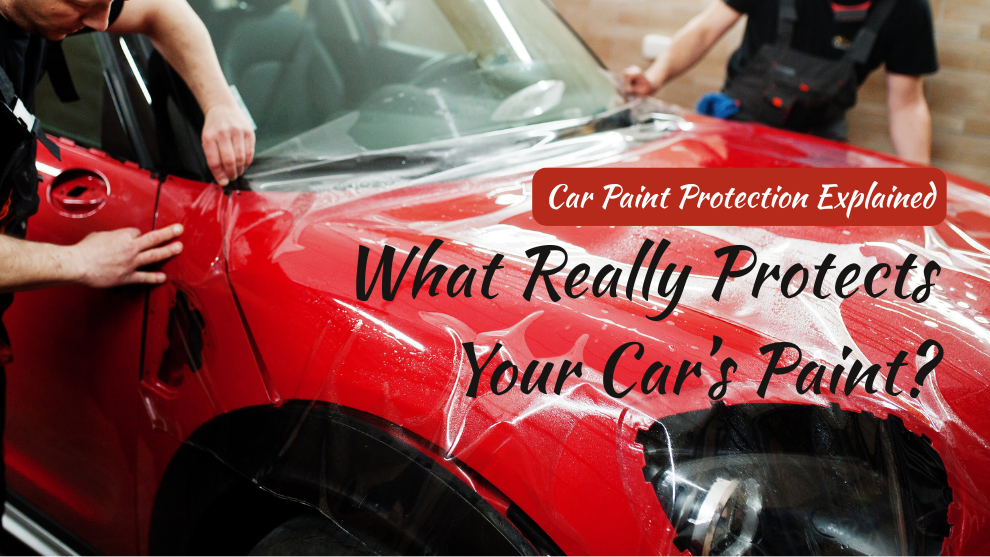
You see it every day, but have you ever truly considered the science behind your car’s finish? It’s more than just a color; it’s a sophisticated, multi-layered shield engineered to withstand everything from scorching UV rays to rock chips on the highway. Understanding this shield is the first step toward making informed decisions about its car paint protection, care, and longevity.
Many car owners find themselves comparing detailing services, waxes, and coatings without knowing what they’re actually protecting. This guide changes that. We’re going layer by layer to demystify the science, so you can evaluate your options with the confidence of an expert.
5 Paint Layers That Make Car Paint Protection Possible
What appears as a single sheet of color is actually a complex system of five distinct layers, each with a specific chemical and physical job. The total thickness is often just 110-125 microns—about the width of a human hair.
1. Pre-Treatment: The Unseen Anchor
Before any paint is applied, the bare metal body of a car undergoes a phosphate treatment. This microscopic chemical process etches the surface, creating an ideal anchor for the subsequent layers and providing the first line of defense against corrosion.
2. E-Coat (Electrocoat): The Anti-Corrosion Guardian
Next, the entire car body is submerged in an epoxy-polyurethane primer bath and an electrical charge is applied. This process, known as electrocoating or E-Coat, ensures that a uniform, 20-micron layer of primer covers every single nook and cranny. Its primary job is robust, long-term corrosion resistance. The widespread adoption of E-Coat after 1998 was a major step in reducing harmful VOC emissions in auto manufacturing.
3. Primer: The Great Equalizer
The primer layer, typically 20-30 microns thick, smooths out any microscopic imperfections left from the E-coat. It’s formulated to create the perfect bonding surface for the color coat and provides essential chip resistance, absorbing the impact from small road debris.
4. Base Coat: The Heart of the Hue
This is the layer you see as “the color.” At only 15-25 microns, it contains the pigments and metallic or pearlescent particles that create the visual appeal. Modern base coats are often acrylic-polyurethane hybrids suspended in a solvent that evaporates as the paint dries, leaving the pigment and binder behind.
- Solid Colors: Contain simple pigments for a uniform, deep color.
- Metallic Colors: Include tiny aluminum flakes that reflect light, creating a sparkle effect. The size and orientation of these flakes are critical to the final look.
- Pearlescent Colors: Use ceramic particles (mica) instead of metal. These particles don’t just reflect light—they refract it, creating a subtle shimmer that can appear to change color from different angles.
5. Clear Coat: The Ultimate Protector
The final and thickest layer, the clear coat, is your car’s primary shield against the world. At 40-50 microns, it makes up nearly half of the total paint thickness. This polyurethane-heavy layer is engineered to resist scratches, block damaging UV radiation, and protect the delicate base coat from chemical contaminants like bird droppings and acid rain. All the gloss, depth, and shine you see comes from the quality and condition of this single layer.
The Chemistry of Compatibility: Why Not All Clear Coats Are Created Equal
For DIY enthusiasts or those considering refinishing work, understanding clear coat chemistry is non-negotiable. The most common point of evaluation is the difference between 1K and 2K systems.
1K (One-Component) Clear Coat: This is a pre-mixed formula that cures through the evaporation of its solvents. It’s user-friendly and dries quickly, making it popular for small touch-ups. However, it’s less durable and remains vulnerable to strong solvents even after curing.
2K (Two-Component) Clear Coat: This system requires mixing the clear coat with a hardener (catalyst) before application. This initiates a chemical reaction that cross-links the polyurethane molecules, creating a far more durable, chemical-resistant, and professional-grade finish. It’s the standard for OEM and high-quality body shop work.
| Feature | 1K Clear Coat | 2K Clear Coat |
| Curing Process | Solvent Evaporation | Chemical Reaction (Cross-Linking) |
| Durability | Lower | Superior |
| Chemical Resistance | Low (can be dissolved by gasoline) | High (resists fuel, chemicals) |
| UV Resistance | Good | Excellent |
| Ease of Use | Very Easy (no mixing) | Requires precise mixing & safety gear |
| Best For | Small DIY touch-ups, accessories | Full panels, professional refinishing |
A critical point for anyone working with acrylic base coats is compatibility. Applying a “hot” 2K clear coat with strong solvents over an acrylic base coat that hasn’t fully cured for at least 24-48 hours can cause the base layer to lift, bubble, or crinkle—a costly and time-consuming mistake.
The Modern Paint Reality: Thinner Finishes Demand Better Care
The automotive paint industry is a rapidly growing market, projected to reach USD 15.49 billion by 2032. A key trend within this growth is a significant reduction in paint thickness.
According to industry data from OCDCarCare.com, modern OEM clear coats are approximately 20% thinner than they were 20 years ago, with some US models having a total paint thickness as low as 89-105 microns.
What does this mean for you? There is far less margin for error. Aggressive polishing to remove scratches, using harsh chemicals, or neglecting your finish can burn through the protective clear coat much faster than on older vehicles, leading to permanent damage. This reality makes a “paint preservation” philosophy—focused on proactive protection rather than reactive correction—more important than ever. This is why professional services like our premium add-ons focus on nourishing and shielding this delicate top layer.
Frequently Asked Questions About Automotive Paint Protection
We hear these questions all the time from customers evaluating their car care options. Here are the straight answers.
Q1. My clear coat is peeling. Can a good wash and wax fix it?
Unfortunately, no. Peeling or delamination means the clear coat has failed and is separating from the base coat. This is a sign of complete layer failure, often due to prolonged UV exposure or poor surface prep during a repaint. At this point, the only true fix is to have the affected panel sanded down and professionally repainted. Regular washing and waxing are preventative measures to stop this from happening in the first place.
Q2. How does a professional hand wash protect my paint better than an automatic one?
While automated washes are convenient, they often use harsh bristles or high-pressure jets that can create microscopic scratches, or “swirl marks,” in your clear coat. Over time, these marks accumulate and dull the finish. A proper hand wash, like the ones offered through our Unlimited Hand Wash Memberships, uses clean mitts, pH-neutral soaps, and specific techniques to gently lift dirt away without abrading the clear coat, preserving its integrity and gloss.
Q3. What’s the difference between wax, sealant, and a ceramic coating?
Think of it as good, better, and best protection for your clear coat.
- Wax: A natural or synthetic product that sits on top of the clear coat, providing gloss and a thin layer of protection that typically lasts a few weeks to a few months.
- Sealant: A fully synthetic polymer that chemically bonds to the clear coat, offering more durable protection (typically 4-6 months) than wax.
- Ceramic Coating: A liquid polymer that forms a semi-permanent, molecular bond with the clear coat. It creates an extremely hard, hydrophobic, and chemical-resistant layer that can last for years, offering the highest level of long-term protection.
Q4. Is it true that environmental regulations are changing car paint?
Yes. Driven by environmental concerns, water-borne paint technologies are predicted to hold the largest market segment by 2035. These paints use water as the primary solvent instead of volatile organic compounds (VOCs), making them much safer for the environment. While they require different application techniques, modern water-borne systems deliver a finish and durability equal to their solvent-based predecessors.
Your Next Step: Protecting Your Investment
Your vehicle’s paint is its first impression and its primary defense against the elements. Now that you understand the intricate science behind its layers, you’re equipped to make smarter decisions about its care.
The takeaway is simple: preserving the clear coat is everything. Regular, professional cleaning and the application of quality protectants are not expenses—they are investments in your vehicle’s value and appearance.
Explore our comprehensive interior and exterior detailing services to see how our expert team can help you maintain and protect your vehicle’s finish for years to come. Your car’s armor deserves nothing less.

