
That new scratch, the dull patch on your hood, or the mysterious etching that wasn’t there last week can be frustrating. Car Paint Damage affects not only your vehicle’s appearance but also its protective surface. When paint damage occurs, car owners are often met with conflicting advice online—ranging from quick, temporary fixes to warnings about expensive body shop repairs—making it difficult to know the right solution.
How do you know which problem you actually have? What can you safely fix yourself? And when is it time to trust a professional to avoid making things worse?
This guide is your clear, authoritative resource. We’ll move past the myths and give you the diagnostic framework you need to confidently assess your car’s paint, understand your options, and make the right decision to restore its shine and protect its value.
Decoding the Car Paint Damage: A Visual Guide to Common Paint Problems
Proper identification is the critical first step. Different types of car paint damage require vastly different solutions, and what works for one can be disastrous for another. Let’s break down the most common culprits.
1. Swirl Marks & Light Scratches
What You See: A network of fine, circular scratches, most visible in direct sunlight. They create a hazy or dull appearance, robbing your paint of its depth and clarity.
Common Causes: These are almost always self-inflicted, typically from improper washing and drying techniques. Using dirty sponges, coarse towels, or automatic car washes with abrasive brushes grinds microscopic dirt particles into the paint, creating thousands of tiny scratches.
Severity Check: The Fingernail Test
Gently run your fingernail across the scratch. If your nail glides over it without catching, it’s likely a superficial scratch confined to the clear coat—the paint’s outermost protective layer. If your nail catches, the scratch is deeper and may have penetrated to the base color or even the primer.
What You Can Do: For very light swirls, a high-quality polishing compound and a clean microfiber applicator can sometimes reduce their appearance.
When to Call a Professional: If the fingernail test fails or if you want a flawless, mirror-like finish, professional paint correction is necessary. Technicians use machine polishers and a series of compounds to safely level the clear coat, permanently removing the swirls rather than just filling them in. Attempting this without experience can quickly “burn” through the paint, a mistake far costlier than the initial problem.
2. Oxidation & Fading
What You See: A chalky, faded, or cloudy appearance on the paint’s surface, usually on horizontal panels like the roof, hood, and trunk that get the most sun exposure.
Common Causes: This is primarily the result of long-term UV ray exposure. Your car’s clear coat contains UV inhibitors, but like sunscreen, they break down over time. Once compromised, UV radiation begins to degrade the pigment in the paint itself, causing it to fade.
Severity Check: Is the surface chalky to the touch? Is the color noticeably lighter than on vertical panels like the doors? In extreme cases, you may see the clear coat beginning to peel or flake, a condition known as clear coat failure.
What You Can Do: If the oxidation is mild, a polishing compound can sometimes remove the top layer of oxidized paint and restore some shine. Applying a quality wax or sealant afterward is crucial for adding a new layer of UV protection.
When to Call a Professional: Once the clear coat has failed and is visibly peeling, polishing will only make it worse. This is a clear sign that professional intervention is required. Mr. Shine’s detailing and restoration services can assess if multi-stage paint correction can save the finish or if more intensive solutions are needed.
3. Acid Rain & Water Spot Etching
What You See: Small, crater-like marks or outlines of water droplets that remain even after washing. They can range from faint surface spots to permanently etched rings in the clear coat.
Common Causes: Acid rain contains pollutants that are corrosive to your paint. Similarly, when regular tap water (which contains minerals) evaporates on your car’s surface, it leaves behind mineral deposits. In the heat of the sun, these deposits can bake into the paint and chemically etch the clear coat.
Severity Check: Do the spots disappear with a quick detailer spray? If so, they are fresh mineral deposits. If they remain after washing, they have started to etch into the clear coat.
What You Can Do: For fresh spots, immediate and careful washing is key. For slightly more stubborn spots, a solution of distilled white vinegar and water can sometimes dissolve the mineral deposits before they cause permanent damage.
When to Call a Professional: Never let water spots bake on your paint. If washing doesn’t remove them, they have likely etched the surface. Aggressive rubbing will only cause scratches. A professional detailer can use specialized compounds to polish away the etching without harming your paint.
4. Bird Droppings & Bug Splatter
What You See: Concentrated, dull, or etched spots directly under the contaminant.
Common Causes: Bird droppings are highly acidic (often a pH of 3 to 4.5) and bug splatter is similarly corrosive. When left on a car’s surface, especially in the sun, they soften and eat into the clear coat, creating a permanent blemish in as little as a few hours.
Severity Check: This is a time-sensitive issue. Any visible mark left after the contaminant is removed indicates some level of etching has already occurred.
What You Can Do: The single most important step is to remove them as quickly and safely as possible. Use a dedicated bug and tar remover or a high-quality quick detailer and a soft microfiber towel to lift the contaminant, not scrub it.
When to Call a Professional: If an etched mark remains after cleaning, stop. You are now dealing with damaged paint. Mr. Shine’s technicians can often polish these spots out completely, restoring the integrity of the finish.
DIY vs. Professional Repair: Making the Right Choice for Your Car
Now that you’ve identified the problem, the next big question is whether you should fix it yourself. This decision involves a careful balance of cost, time, and the risk of causing more significant damage.
The Reality of DIY Fixes
The appeal of a $20 bottle of scratch remover is strong, but the reality is often disappointing. While these products can temporarily fill in very light swirls, they rarely solve the underlying problem.
- The Myths: Common “hacks” like using toothpaste or WD-40 are ineffective and often harmful. Toothpaste is an abrasive that can create a hazy mess of new scratches, while WD-40 is a solvent that offers no corrective properties and can interfere with future professional work.
- The Risk: Your car’s clear coat is incredibly thin—often less than the thickness of a sticky note. Industry data shows that removing even a small amount can compromise its ability to protect from UV rays. Aggressive DIY polishing with the wrong product or technique can easily burn through this layer, leading to costly repainting.
A DIY approach is best reserved for immediate contaminant removal and attempting to address only the most superficial of swirl marks.
The Mr. Shine Difference: An Investment in Perfection
Opting for a professional service isn’t just about paying someone to do the work; it’s about investing in a guaranteed outcome that preserves and enhances your vehicle’s value.
- Expertise & Equipment: Our technicians are trained to diagnose paint damage at a microscopic level. We use tools like digital paint thickness gauges to know exactly how much clear coat we can safely work with, ensuring a perfect finish without compromising paint integrity.
- Guaranteed Results: Unlike the uncertainty of a DIY fix, our professional detailing and restoration services deliver a flawless, durable result. We don’t just hide damage—we eliminate it.
- Long-Term Value: While professional paint correction can range from a couple of hundred to over a thousand dollars, depending on the severity, it’s a strategic investment. A vehicle with pristine paint commands a higher resale value and is protected from further degradation, like rust. According to industry reports, a professional job provides a level of quality and longevity—often with a warranty—that DIY kits simply cannot match.
Beyond Repair: Proactive Protection for a Lasting Finish
The best way to deal with car paint damage is to prevent it from happening in the first place. Modern technology offers incredible solutions for long-term protection.
- Ceramic Coatings: Think of this as a supercharged, permanent wax. A liquid polymer that chemically bonds with your car’s paint, a ceramic coating creates a hard, hydrophobic layer of protection. It offers enhanced resistance to chemicals, UV rays, and etching for anywhere from 2-7 years, while making your car incredibly easy to clean.
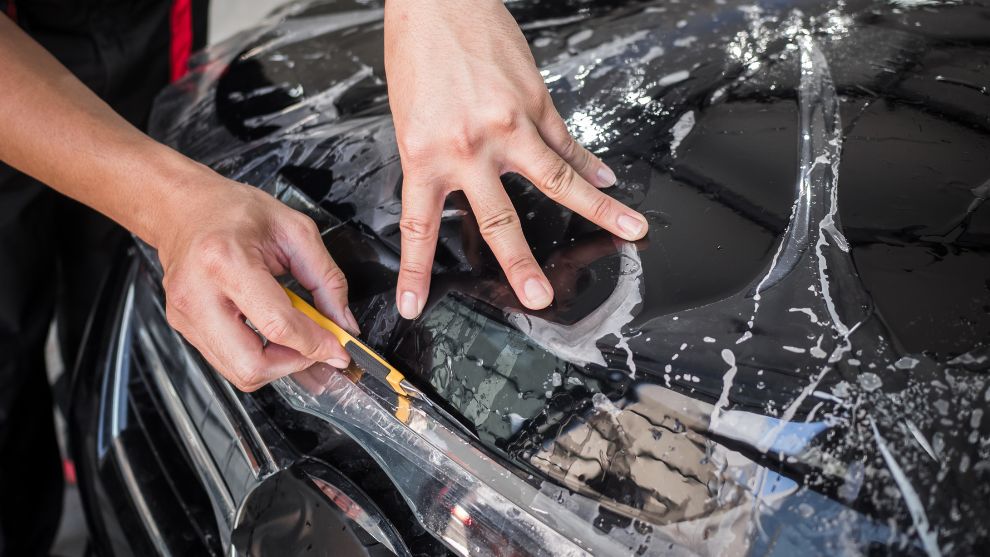
- Paint Protection Film (PPF): For the ultimate defense against scratches, rock chips, and scuffs, PPF is the answer. This transparent, self-healing film acts as a sacrificial barrier, absorbing impacts that would otherwise chip or scratch your paint. A high-quality PPF installation can last 5-10 years, keeping your original paint in showroom condition underneath.
These advanced options are a core part of our premium add-on services, designed to give you peace of mind and lock in that perfect finish.
Frequently Asked Questions About Paint Repair
Q1. How much does professional scratch repair cost?
Costs vary based on the depth and size of the scratch. A simple polish to remove light swirls might start around $150-$200, while multi-stage correction for deeper scratches can be $500 or more. We always provide a transparent assessment and estimate upfront.
Q2. Can you really fix scratches without repainting?
Absolutely. As long as a scratch hasn’t gone through the clear coat and base color down to the primer, our paint correction techniques can almost always remove it completely, preserving your factory paint.
Q3. Why did a DIY scratch remover make my paint look worse?
Most consumer-grade scratch removers contain harsh abrasives or fillers. The abrasives can create a haze of micro-scratches, while fillers can look good for a day before washing away, revealing the original scratch and a now-duller surrounding area.
Q4. Is a ceramic coating worth the investment?
For anyone who wants to protect their vehicle long-term, reduce washing time, and maintain a deep, glossy shine, a ceramic coating is one of the best investments you can make. It protects against the very environmental damages we’ve discussed in this guide.
Don’t Let Paint Damage Dim Your Shine
Your car is a significant investment. Protecting its finish is about more than just aesthetics—it’s about preserving its value and your pride in ownership. While it’s tempting to reach for a quick fix, understanding the true nature of paint damage empowers you to make a smarter choice.
If you’re unsure about the best course of action for your vehicle, let our experts help. Visit us for a professional assessment. We’ll diagnose the issue, walk you through the options, and help you restore your car’s brilliant shine with confidence.

